
Grounded Eagles: Book II
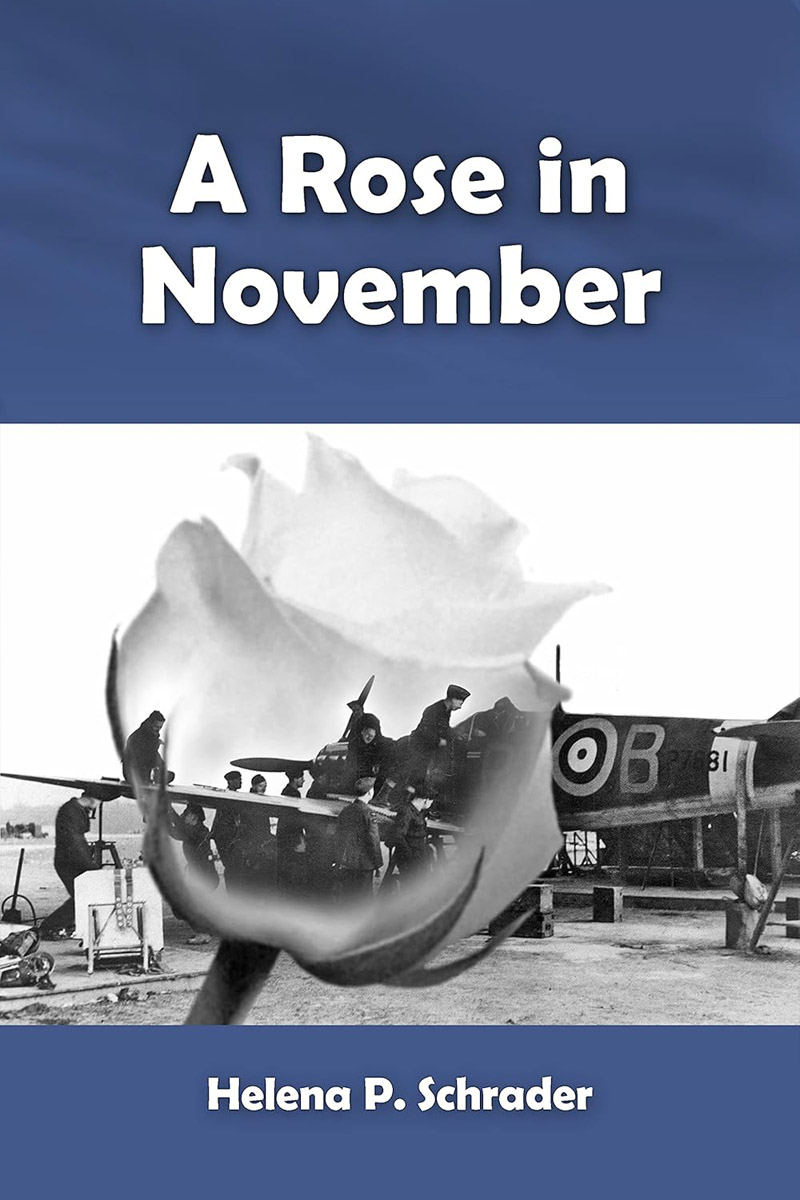
A WWII Love Story for the Not-So-Young
Rhys Jenkins, a widower with two teenage children, has finally obtained his dream: “Chiefy” of a Spitfire squadron. But an unexpected attraction for an upper class woman threatens to upend his life.
Almost twenty years ago a reader complained to me that all love stories are about “young things.” She had just married at age 55 and noted correctly that finding love at a mature age was just as beautiful as finding it when young. Furthermore, lovers with careers, children and emotional “baggage” from the past face different, more complex challenges than young lovers. Complex challenges translate into good novels. So, this off-hand comment piqued my interest as a novelist and inspired me to write a story featuring mature lovers.
The choice of characters and setting were dictated by the fact that I had only just finished writing Where Eagles Never Flew. The characters of that novel were still with me, talking to me, influencing me. Hattie Fitzsimmons, only a minor character in Where Eagles Never Flew, insisted firmly that her story was exactly the kind of thing I was looking for. I had to agree. She was so determined to have her story told, in fact, that once I sat down to write, I never lost my way or lost my inspiration for a moment. Hattie was beside me the whole time explaining the situation. Whether my skills as a writer are adequate to tell her tale is for you, the reader, to decide.
However, another important theme of this work is class-consciousness or class prejudice, and the RAF’s role in breaking some class barriers down. While Britain remained a class society in the interwar years, the RAF –exceptionally — at its inception established an apprentice program to attract technically minded young men to serve as ground crews. The applicants came from the lower middle and upper working classes, and the programme was welcomed as a huge opportunity for these underprivileged elements to enter the glamorous world of aviation.
Training lasted three years and in some ways the graduates of the apprentice program were as well educated as the officer graduates of the Royal Airforce College at Cranwell. This inevitably led to a blurring of the distinctions between the ranks, reducing the sense of divide between officers and other ranks.
Furthermore, the RAF actively encouraged ambition by offering cadet scholarships to Cranwell for the three best apprentices each year. Another training scheme allowed flying training for outstanding ground crew, who thereby gained sergeant’s stripes regardless of what trade they fulfilled on the ground.
When the war started, roughly one quarter of the RAF’s pilots were regular sergeant pilots trained through this scheme. These factors contributed to the image of the RAF as a comparatively socially mobile meritocracy. In the novel, however, I explore the impact of professional mobility on personal behaviour.