
Grounded Eagles: Book III
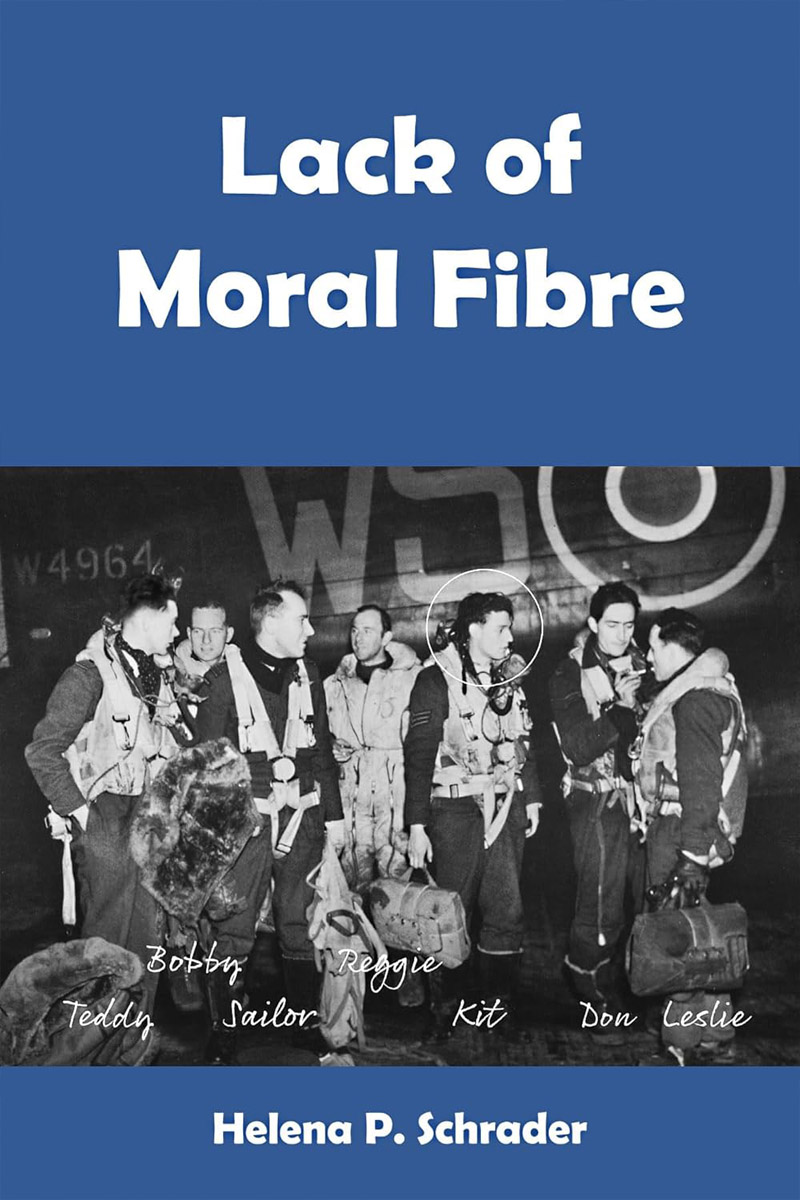
In late November 1943, Flight Engineer Christopher “Kit” Moran, DFM, refuses to fly to Berlin on what should have been the seventh “op” of his second tour of duty. His superiors declare him “lacking in moral fibre,” and he is sent to a mysterious DYDN centre. Here, psychiatrist Wing Commander Dr Grace must determine if he has had a mental breakdown requiring pschiatric treatment — or if he deserves humiliation and disciplinary action for cowardice.
The term “Lack of Moral Fibre” (LMF)was introduced into RAF vocabulary in April 1940 to characterize aircrew who refused to fly without a medical reason.The RAF needed a means to deal with this unexpected problem because flying was voluntary, hence the refusal to fly was not technically a breach of the military code. After investing as much as two years into training aircrew, the RAF could not afford to allow the refusal to fly become widespread.
Men designated “LMF” (Lacking in Moral Fibre) faced swift disciplinary action. For the airmen who continued flying operations, the fate of those ‘expeditiously’ posted for LMF was shrouded in mystery. Rumours spread and legends still abound. The threat of being designated “LMF” acted as a powerful deterrent to wilful or casual malingering. Tragically, the threat of humiliation may also have pushed some men to keep flying when they had already passed their breaking point, leading to errors, accidents, and loss of life.
This novel is based on a combination of first-hand accounts and histories of Bomber Command operations in late 1943 and early 1944, as well as post-war analysis of how the RAF dealt with cases of “LMF.” The flashbacks to Kit’s operational flights describe targets, routes, tactics, conditions, and incidents from the historical record, although the date, timing and obviously the individuals involved have been changed. The treatment accorded Kit at the NYDN Centre in Torquay (which was an actual RAF establishment) and the opinions expressed by Wing Commander Grace (who was a neuropsychiatrist stationed there during the war) are aligned with the historical record. Dr Grace is the only historical figure in this novel; all other characters are fictional.